
What's the Story?

Why Storytelling matters in photography
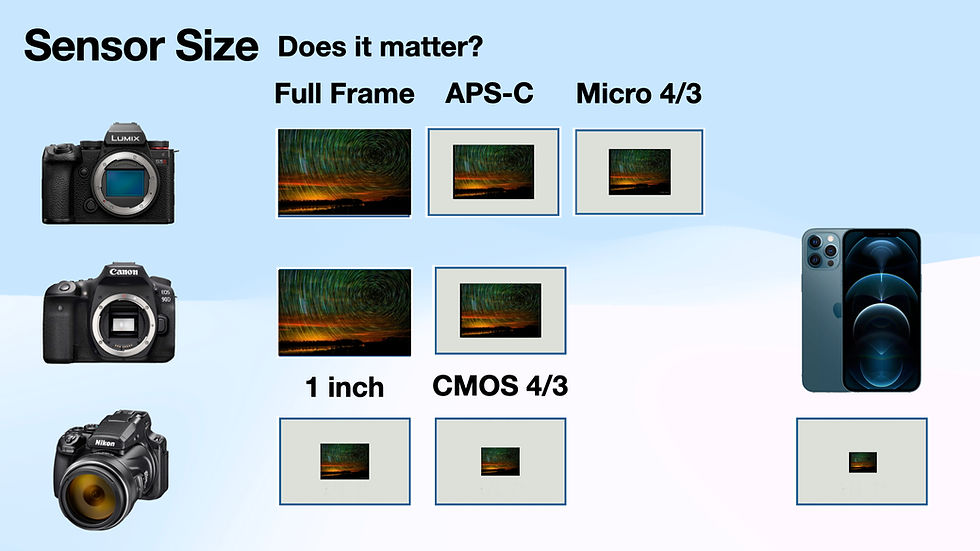
People often ask me what camera they should buy. They ask about sensor size, autofocus systems, megapixels, dynamic range, and lenses. Those things matter.
But they're not the first question I ask myself when I pick up a camera.
The first question is:
What's the story?
Photography has always been about stories. Long before social media, before digital cameras, before photography became something we carry in our pockets, photographs served a simple purpose. They helped us remember.
A wedding photograph tells the story of a promise.
A landscape photograph tells the story of a place.
A portrait tells the story of a person.
Even the casual snapshot on your phone tells the story of a moment that mattered enough for you to stop and preserve it.
There is nothing wrong with snapshots. Some of the most important photographs we ever take are imperfect ones. They're blurry. Poorly composed. Technically flawed.
But they survive because the story survives.
The strongest photographers understand that they're not simply recording what the world looks like. They're deciding what parts of the world will be remembered. The photograph becomes stronger when it gives the viewer something to wonder about.
Snapshots vs storytelling
There Is Nothing Wrong With Snapshots
Family photos.
Vacation pictures.
Birthday parties.
The dog is doing something ridiculous.
These are important.
A snapshot doesn't have to be artistic to be valuable.
Sometimes the most meaningful photograph you'll ever take is technically terrible.
Because its value comes from memory.
Grandpa and Grandson First Days Caught in the Act
My great-grandfather was the king of the snapshot.
I've never met the man. At least, I have no memory of him. What I do have is nearly six hours of 8mm movie film he left behind.
You'd think that would be a treasure trove of memories.
When the family finally transferred the footage, we discovered something interesting. Out of nearly six hours of film, only about forty minutes held much value to us.
The rest were landscapes.
Vacation destinations.
The scenery rolling by.
I'm sure those images meant something to him. They marked places he had been and experiences he had shared with my great-grandmother. They're not bad photographs any more than a picture of Old Faithful or the Eiffel Tower is a bad photograph.
They simply tell a very small story:
"I was here."
The forty minutes the family treasures tell a different story.
They're cooking together. Laughing together. Walking together. Living ordinary moments side by side.
Those images don't just show where they were.
They show who they were.
That's the difference between a snapshot and storytelling.
There's nothing wrong with snapshots. We take them every day with our phones. They help us remember where we've been and what we've done.
But storytelling asks a different question.
Not "What did this look like?"
But "Who were we?"
Storytelling Is About Intention
The difference between a snapshot and storytelling is often one question:
What am I trying to say?
Who is this person?
What are they feeling?
What happened here?
What happens next?
A photograph becomes stronger when it gives viewers something to wonder about.
Stories shape how we understand the world. We tell stories about our families, our successes, and our failures. In many ways, we are stories. Photography is one of the ways we carry those stories forward.
When I study photographers like Henri Cartier-Bresson, Dorothea Lange, and Steve McCurry, I see three different approaches to storytelling.
Cartier-Bresson waited for stories to reveal themselves. He called it the decisive moment. He would spend hours observing the world, waiting for all the elements of a scene to come together in a fraction of a second.
Dorothea Lange looked for the human story behind the photograph. Her famous Migrant Mother became an enduring symbol of the Great Depression, not because it was technically perfect, but because it captured something universally human.
Steve McCurry's Afghan Girl did something similar. The image is memorable because of the emotion it conveys. Long after people forget the details of when or where it was taken, they remember those eyes.
Each photographer worked differently.
But all three were asking the same question:
What story is this photograph telling?

Henri Cartier-Bresson - Behind the Gare Saint-Lazare 1932 
Dorothea Lange - Florence Thompson with several of her children March 1936 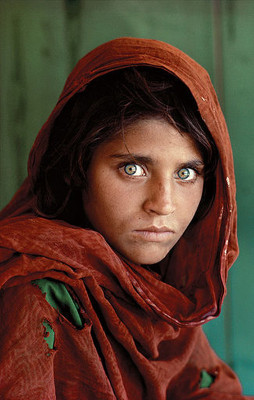
© Steve McCurry - Sharbat Gula
How I approach storytelling
If you want to improve your photography, remember that gear is only part of the equation. Good equipment helps, but it can only take you so far.
There are plenty of talented photographers here in the Bradenton-Sarasota area with excellent gear and a strong command of the craft.
The difference isn't always the camera.
It's the story.
When people look for a wedding photographer, they often focus on equipment, experience, and technical skill. Those things matter. But what they're really looking for is someone who can tell the story of a promise.
Anyone can record an event.
Not everyone can tell their story.
When I photograph people, especially portraits and headshots, I think about them a little differently. I imagine them as a character card from a trading card game.
I know. It's geeky.
But it works.
Every character has strengths, weaknesses, abilities, and a story. When I meet someone for the first time, I'm trying to figure out what makes them unique. What stands out? What makes them memorable? What story are they telling the world?
My goal isn't simply to make them look good.
My goal is to capture something true about who they are.
The interesting thing is that the person I see is often different from the person they see in the mirror. We all carry a version of ourselves in our heads. As photographers, we're tasked with translating that person into a photograph.
When I'm successful, the image becomes more than a portrait.
It becomes a glimpse of character.
© Donnavon Evans - Portrait of Young Man Playing Guitar © Donnavon Evans - Portrait of Young Man in the Mangroves © Donnavon Evans - Portrait of Young Mother and Daughter
The same thing happens at weddings, receptions, and events. I'm always looking for those decisive moments. The laugh that wasn't planned. The look between two people. The reaction lasts only a fraction of a second.
Those are the moments where stories live.
Landscape photography presents a different challenge. People tell their stories directly. Landscapes don't.
A landscape photographer has to find meaning in light, weather, season, and place. The moment the sun breaks through a cloud bank or the fog rolls across a mountain will never happen exactly the same way again.
That's one reason I love photographing landscapes. Every image becomes a record of a moment that can never be repeated.
© Donnavon Evans - Man Crossing the Stars at Night © Donnavon Evans - Caspersen Beach, FL © Donnavon Evans - Christmas, FL
Stories Change
Stories are never finished.
The meaning of a photograph changes because our lives change. Photographs may stay the same, but we don't.
A photograph that once meant one thing can mean something entirely different years later.
Take a wedding photograph. On the day it is taken, it captures a promise. Thirty years later, it may tell a different story. Perhaps it's a celebration of a life spent together. Perhaps it's a reminder of someone who has passed away. Perhaps it's a record of a relationship that eventually ended.
The photograph hasn't changed.
The story has.
I've photographed my son and me in a few different ways over the years. After his mother and I divorced when he was very young, there was a photograph of the two of us with our heads together. He was just a toddler.
Years later, when he turned nineteen, we recreated that same photograph.
Putting those two images side by side compresses decades of history into a single moment. Every success, every struggle, every ordinary day between those photographs suddenly exists in the space between them.
The images echo each other across time.
One Year Old Nineteen Years Later 2 Years to 12 years old - Ten Years.
Almost every year, I photograph the sunrise rising between the spans of the Sunshine Skyway Bridge. It only happens twice a year and lasts for just a few minutes.
Every photograph is technically the same event.
Yet every photograph is different.
The weather changes. The light changes. I change.
When I place those images side by side, the story becomes larger than any single photograph. It becomes a record of time itself passing.
Sometimes the story isn't contained in one image.
Sometimes it's found in the relationship between many images spread across years.
The Final Cut
Has anybody seen the movie Final Cut starring Robin Williams?
I always found the premise fascinating. In the film, people have implants that record their entire lives. When they die, Robin Williams' character edits those memories into a final presentation shown at their funeral. The difficult part is deciding what stays and what gets cut.
In a strange way, photographers do something similar every day.
Every time we crop an image, select a favorite, delete a frame, or retouch a portrait, we're editing a story. We're deciding what people will remember and what they won't.
For example, there aren't many photographs of me from high school. When one occasionally surfaces on social media, I usually clean it up before reposting it. I had terrible acne. Pizza Face Dono.
If I could erase Pizza Face Dono from history, I probably would.
Is that healthy?
Probably not.
But it's part of my story.
And that's what makes Final Cut such an interesting idea. We all edit ourselves. We all decide which parts of our stories we want to preserve and which parts we'd rather leave behind.
The question becomes even more interesting when we're gone. Some photographers have destroyed negatives because they didn't want certain work remembered. Others have spent their careers carefully choosing which images represented them.
Yet history doesn't always cooperate.
After Ansel Adams died, previously unpublished work surfaced and was shared anyway.
Then there's Vivian Maier. She left behind more than 150,000 photographs, most of them unseen during her lifetime. After her death, others discovered her work and decided it deserved an audience.
Did she want those photographs published?
I don't know.
Nobody really knows.
But it raises an interesting question.
If someone found every photograph you've ever taken, every frame you deleted, every image you thought wasn't good enough, what story would they tell about you?
When I think about photography, that's the question I keep coming back to.
Not just what photographs I want to make.
But what photographs I want to leave behind.
I know I've mentioned a lot of photographers throughout this article. The truth is, I'm a photography nerd. I think about this stuff all the time. It influences the way I photograph people, landscapes, weddings, and even the snapshots I take of my family.
Sometimes I'm successful at it.
Sometimes I'm not.
I constantly look to photographers whose work inspires me, like Peter Baumgarten. When I see the stories he creates from sky, water, and ice, it reminds me how much there still is to learn.
That's one of the things I love about photography. No matter how long you've been doing it, there's always another story to tell and another way to tell it.
I've failed more times than I've succeeded. Most photographers have. The difference is that we keep chasing the story anyway.
Because in the end, cameras change.
Technology changes.
Styles change.
Stories endure.
So the next time someone asks me what camera they should buy, my answer is still the same:
That's not the first question.
The first question is:
What's the story?
And if I'm lucky, the story I'm leaving behind will be a good one.


Comments