
Why is Henri Cartier-Bresson still relevant?

Updated: Oct 31, 2025
📸 Chasing the Decisive Moment
What Henri Cartier-Bresson Taught Me About Patience
I teach photography classes at Johnson PhotoImaging, and one lesson I always return to comes from Henri Cartier-Bresson. I didn’t study under him, of course — I studied him in one of the many photography courses I took in college. But his photo-philosophy stuck with me. Decades later, it still shapes how I see, shoot, and teach.
I still remember the first time I saw one of Henri Cartier-Bresson’s photographs. It wasn’t about sharpness or fancy gear — it was about timing. That impossible instant when movement, emotion, and geometry align for a heartbeat, then vanish forever.

As a photographer, I’ve chased that moment more times than I can count. Sometimes I find it; sometimes it slips past, just out of reach. But Cartier-Bresson taught me that the real art of photography isn’t pressing the shutter — it’s waiting for the world to align and knowing when to push the button.
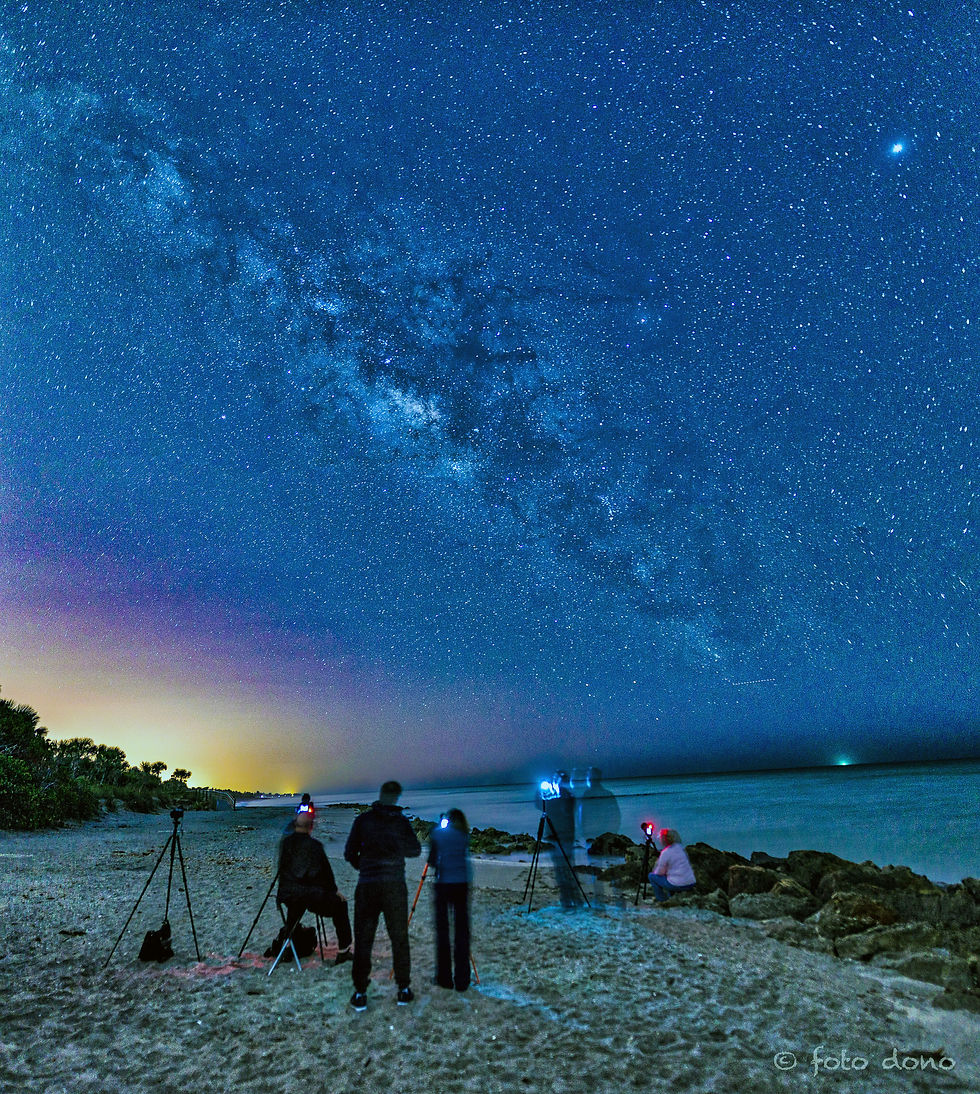
Patience is a skill that always needs tending.
Who He Was
Henri Cartier-Bresson was a French photojournalist often called the father of modern street photography. He co-founded Magnum Photos in 1947, a collective that reshaped documentary storytelling. Armed with a simple Leica and 50mm lens, he traveled the world capturing everything from postwar Europe to Gandhi’s final days.
He coined a phrase that still defines photography today: the decisive moment — “the simultaneous recognition, in a fraction of a second, of the significance of an event.”
His most famous image — a man leaping across a puddle behind Gare Saint-Lazare — embodies pure instinct and timing. You can feel the breath between intention and action.

What Draws Me In
I’m not a street photographer, but his work still inspires me.
What I love most about Cartier-Bresson isn’t just his timing — it’s his respect for life’s rhythm. He didn’t stage or manipulate his subjects; he let life unfold and trusted his instinct to recognize when it all came together.
His frames have a kind of geometry that feels both natural and deliberate. Lines, shadows, and human gestures seem to fall into place like musical notes finding harmony. Even in chaos, there’s balance — not because he forced it, but because he was listening to what the moment wanted to be.
That’s a reminder I need every time I pick up the camera: slow down, look longer, and let the world breathe before you press the button.

🕰️ The Origin
Cartier-Bresson popularized the term in his 1952 book Images à la Sauvette (translated to The Decisive Moment in English). The phrase came from a line by Cardinal de Retz:
“There is nothing in this world that does not have a decisive moment.”
Cartier-Bresson applied that idea to photography — that every unfolding event contains one precise instant when form (composition) and content (emotion or meaning) come together perfectly. If you catch that instant, the photograph becomes timeless.
🎞️ What It’s Really About
The decisive moment isn’t about luck or speed — it’s about seeing. It’s the act of recognizing harmony between what’s happening in front of you and how it fits inside your frame.
Cartier-Bresson once said:
“To me, photography is the simultaneous recognition, in a fraction of a second, of the significance of an event, as well as of a precise organization of forms which give that event its proper expression.”
In simpler terms:
You see a story unfold.
You sense the emotional or symbolic heartbeat of that story.
You frame and click exactly when everything — gesture, light, line, and feeling — aligns.
That’s the decisive moment.
🕊️ He taught us that photography is about seeing, not shooting.
In a world where everyone has a camera in their pocket, Cartier-Bresson reminds us that great photography isn’t about megapixels or lenses — it’s about timing, intuition, and awareness. He trained his eye to recognize that split-second where form and emotion collided. That’s still the essence of great photography — whether it’s shot on a Leica or an iPhone.
✨ In short:
Cartier-Bresson is still relevant because his photography wasn’t about cameras — it was about connection. He captured the rhythm of real life without controlling it. And in an era where images are endlessly edited, filtered, and curated, his honesty feels even more revolutionary.

🎨 Where do I fit in this narrative?
I strive to find connection in my work — something I think Cartier-Bresson did brilliantly. It’s why I continue to photograph. I’m always looking for those moments in life’s rhythm. You don’t need a fancy camera to find them; you just need the honesty to look for what matters.
My photos are mostly landscapes with the occasional portrait. Anyone can take a picture, and if you’re lucky, you’ll capture one that connects. But it’s harder to take a photograph that feels honest without adding to it — without trying to control what it wants to be.
A photographer friend once told me, “You do good work, but you dress it up in edits.” (Sigh.) I took it as a compliment — and a fair critique. I’m my own toughest editor. I see flaws that others might miss, and I fix them because I can’t help wanting each image to speak clearly.
Still, I work at it — one photo at a time — trying to create like Cartier-Bresson, and to offer my own perspective on life’s rhythm.
In a world where everyone has a camera in their pocket, Cartier-Bresson reminds us that great photography isn’t about megapixels or lenses — it’s about timing, intuition, and awareness.
His photographs show that honesty is the most powerful form of expression.
And that’s what I chase in my own work — not perfection, but connection.
I may still polish too much or critique myself too harshly, but every time I pick up the camera, I try to find what he found: life’s rhythm, waiting for me to notice it.

Got thoughts about the decisive moment — or your own story about waiting for the shot?
Hit the Ask Dono button and let’s talk photography.
#fotodono #PhotoTips #HenriCartierBresson #DecisiveMoment #StreetPhotography #PhotographyInspiration #SeeLikeAPhotographer #MindfulPhotography


Comments